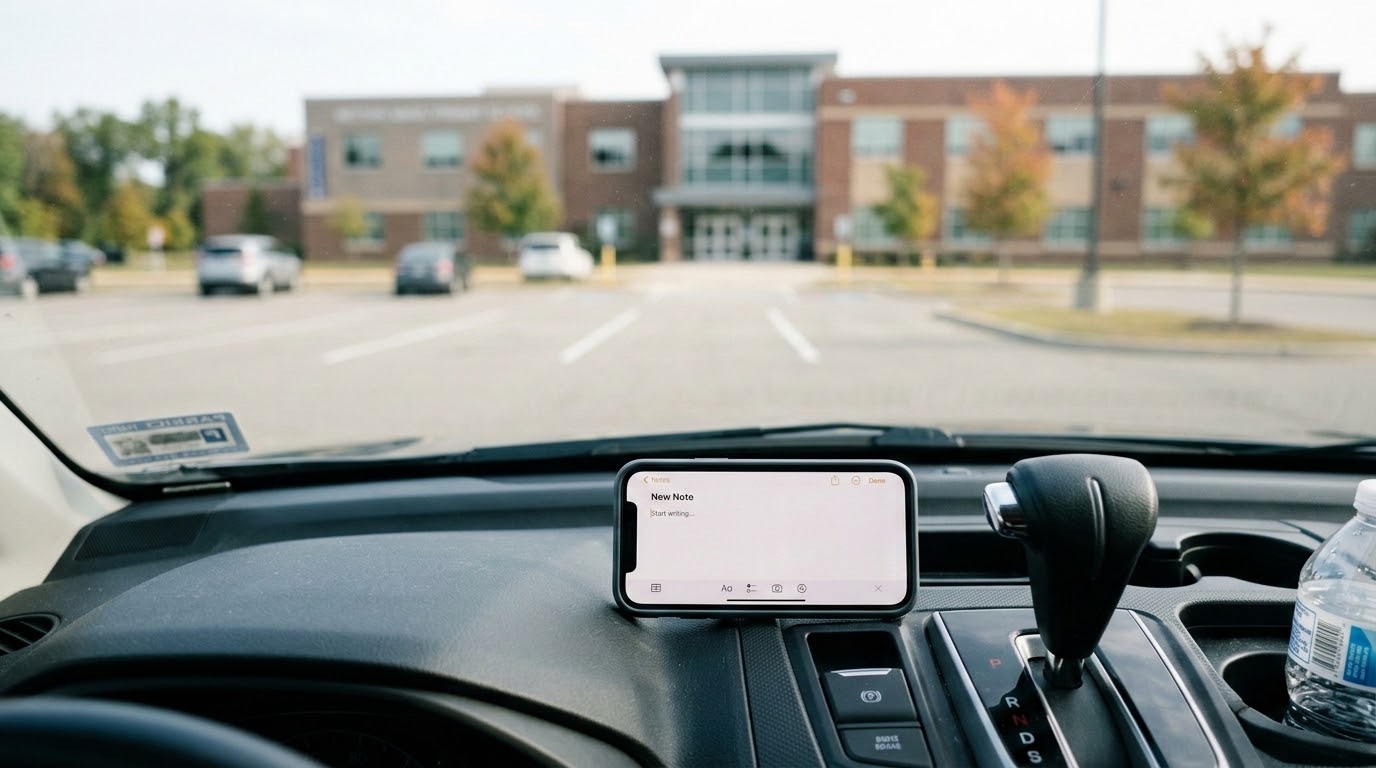
The Instinct to Hit Record
You have a meeting coming up with the principal, and somewhere in your planning, the thought occurs to you: what if I just record it? That way there is no question later about what was said, no he-said-she-said, no risk of an inaccurate summary from the school.
It is a logical instinct. But before you walk in and press record, there are a few things you need to know because this is not as simple as just pressing a button.
It Depends on Your State
Whether you can legally record on your phone depends entirely on your specific state's laws regarding one-party versus all-party consent.
In a one-party consent state, only one person in the conversation needs to agree to the recording meaning you could legally record a meeting yourself without telling anyone else, because you are the consenting party. In an all-party consent state, every person being recorded needs to agree, which means recording the principal without their knowledge could be illegal, regardless of your intentions.
This distinction matters enormously, and it is not something to guess about. You must check your specific state's laws before you record anything, because the legal consequences of recording without proper consent can be significant and could undermine your credibility in the very situation you are trying to document.
Ask First, Even Where It's Allowed
Here is something I tell parents even in states where one-party consent makes recording technically legal: ask the principal or school representative if they mind being recorded.
This is not just a courtesy. Asking directly accomplishes a few things. It shows good faith. It often gets a clear yes or no, which removes ambiguity. And practically speaking, a school staff member who knows they are being recorded may communicate more carefully and more accountably which can work in your favor regardless of the legal technicalities.
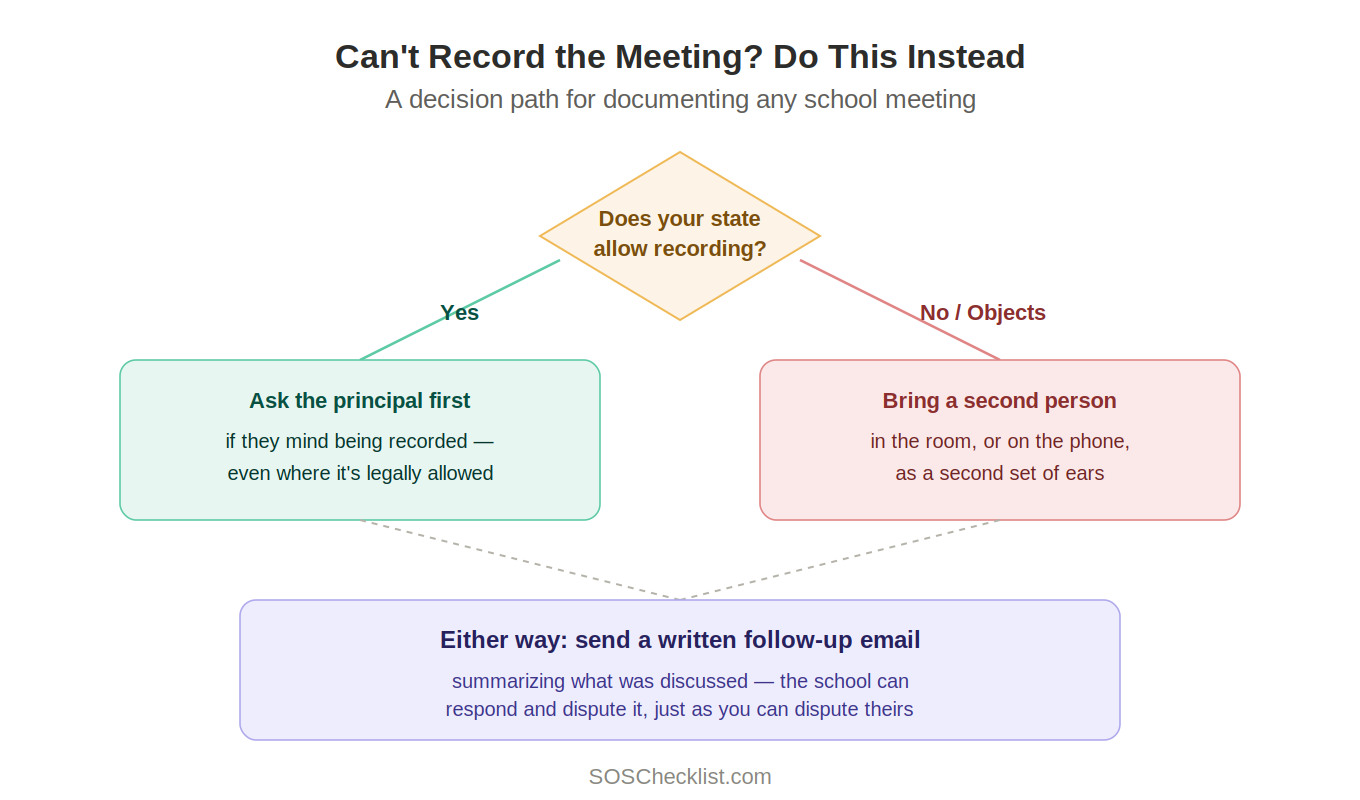
Can't Record the Meeting? Do This Instead
If the School Objects to Recording
If the principal or school representative does object to being recorded, you have options that still protect you they just do not involve a recording device.
Bring someone with you to the meeting. A second adult in the room serves as another set of ears, another memory of what was discussed, and another person who can help you reconstruct the conversation accurately afterward. If bringing someone in person is not possible, have someone on the phone during the meeting, even just listening, to serve that same purpose.
This is not about being adversarial. It is about making sure you are not the only person who has to remember everything that was said, under pressure, in real time.
The Wrap-Up Email — And Why It Cuts Both Ways
Whether or not you were able to record the meeting, send a follow-up email afterward detailing your perception of what was discussed. This creates a written record of your understanding, sent close to the time of the meeting while details are fresh.
But here is something important to understand: this works both ways. If you send a wrap-up email summarizing the meeting, be aware that the school district can respond and disagree with your points. And just as they can dispute your summary, you can dispute an inaccurate summary email sent by the school.
This is not a reason to avoid sending the email. It is a reason to make your summary as specific, calm, and factual as possible focused on what was said and agreed upon, not on characterizations or assumptions. A well-written summary is harder to credibly dispute than a vague or emotional one.
Mistakes I Would Avoid
1. Recording without checking your state's consent laws first.
This is not optional homework it is essential. Verify whether your state is one-party or all-party consent before you record any conversation, school-related or otherwise.
2. Recording secretly in an all-party consent state.
Beyond the legal risk, if this comes to light later, it can undermine your credibility in the broader situation, even if your underlying concerns about your child's safety are completely valid.
3. Assuming a recording is your only option for documentation.
A second person in the room, a phone call with someone listening in, and a prompt written follow-up email are all valid, lower-risk ways to create a record of the meeting.
4. Sending a vague or emotional follow-up email.
A wrap-up email that is general or charged with emotion is easier for the school to dispute. Stick to specific statements, agreements, and action items.
5. Assuming the school's summary will automatically be accepted as accurate.
If the school sends a summary of the meeting that does not match your understanding, you have the right to respond and point out the discrepancies, just as they can with yours.
Questions to Ask Before the Meeting
Have I verified whether my state is a one-party or all-party consent state?
If I plan to record, have I asked the principal or school representative directly whether they mind?
If recording isn't an option, who can I bring with me, or have on the phone, as a second set of ears?
Am I prepared to send a factual, specific follow-up email immediately after the meeting?
Do I understand that the school may respond to and dispute my summary — and that I can do the same with theirs?
When Outside Help May Be Appropriate
If you are unsure about your state's consent laws, or if a situation involving a recording has already become contentious, consulting with a qualified attorney in your state can clarify your rights and options.
A school safety consultant can help you prepare for a meeting including what to bring, what questions to ask, and how to structure an effective follow-up email regardless of whether recording is part of your plan.
If the meeting itself is a source of significant stress or anxiety, support from a qualified mental health professional can help you navigate the emotional weight of these conversations.
Take the Safety Over Silence Checklist
Before your next meeting with the school, take the Safety Over Silence Checklist at SOSChecklist.net. It can help you prepare your documentation strategy, organize what you want to address, and plan your follow-up whether or not recording is part of your approach.
Disclaimer
The Student Readiness Checklist and Safety Over Silence content are educational resources only. They do not provide legal, medical, mental health, therapeutic, or crisis advice; determine whether a school or individual violated the law; guarantee a particular outcome; or create an attorney-client, therapist-client, or other licensed professional relationship. Laws, school policies, and procedures vary by jurisdiction and circumstance. Consult an appropriately qualified professional regarding your specific situation. If a child is in immediate danger, contact emergency services or the appropriate local authority. If a child is experiencing a mental health crisis or expressing thoughts of self-harm, call or text 988 in the United States or seek immediate qualified help.
Frequently Asked Questions
Can I legally record my meeting with the school principal?
It depends on your specific state's laws regarding one-party versus all-party consent. In a one-party consent state, you may be able to legally record without the other person's knowledge because you are a party to the conversation. In an all-party consent state, everyone being recorded must agree. Verify your specific state's law before recording any conversation, and consider asking the principal directly even where recording is legally permitted.
What is the difference between one-party and all-party consent?
In a one-party consent state, only one participant in a conversation needs to agree to a recording for it to be legal meaning you, as a participant, could record without informing the other party. In an all-party consent state, every person in the conversation must agree to being recorded. These laws vary by state and should be verified directly rather than assumed.
What should I do if the school says no to recording the meeting?
Bring someone with you to the meeting to serve as a second set of ears, or have someone on the phone during the conversation if an in-person companion is not possible. Afterward, send a prompt, factual, written follow-up email summarizing what was discussed.
Should I still ask permission to record even in a one-party consent state?
Yes. Asking directly shows good faith, removes ambiguity, and often results in more careful, accountable communication from school staff who know they're being recorded. It can work in your favor even when it isn't legally required.
What happens if I send a follow-up email and the school disagrees with my summary?
The school district can respond and dispute the points in your summary, just as you can dispute an inaccurate summary email sent by the school. This is why it's important to keep your follow-up factual, specific, and focused on what was actually said and agreed upon.
How can the Safety Over Silence Checklist help me prepare for a school meeting?
The Safety Over Silence Checklist at SOSchecklist.net helps parents organize their documentation strategy, plan what to address in the meeting, and prepare an effective follow-up whether or not recording is part of the approach.
Is this article legal advice?
No. This article is educational content only. It does not constitute legal, medical, mental health, or crisis advice, and does not create any professional relationship. Recording consent laws vary significantly by state. Consult a qualified attorney for guidance specific to your situation and jurisdiction.
When should I consult an attorney about recording a school meeting?
If you are uncertain about your state's consent laws, or if a prior recording or meeting summary has already become a point of dispute with the school, consulting a qualified attorney familiar with your state's laws is an appropriate next step.
References
Digital Media Law Project — Recording Phone Calls and Conversations: https://www.dmlp.org/legal-guide/recording-phone-calls-and-conversations (URL should be verified before publication)
StopBullying.gov — How to Report Bullying: https://www.stopbullying.gov/resources/get-help/find-a-local-organization
U.S. Department of Education — School Safety: https://www.ed.gov/school-safety
California Department of Education — Bullying Prevention: https://www.cde.ca.gov/ls/ss/se/bullyingprev.asp
Oklahoma State Department of Education — Safe Schools: https://sde.ok.gov/safe-schools (URL should be verified before publication)